AMOVELLE Beauty
Why do makeup brushes shed? This question deserves more than a simple answer about poor quality. Shedding can reveal problems in fiber selection, adhesive control, ferrule pressure, trimming, washing, or storage. A brush may look luxurious in a product photograph, yet release loose hairs across a clean cheek. That detail matters to consumers, makeup artists, and distributors.
Professional makeup artist and brush educator Wayne Goss has said, “A quality brush should hold its shape and never feel scratchy on the skin.” His observation highlights an important testing point. Softness alone does not prove durability. Manufacturers must also control how fibers are anchored inside the ferrule. In many factories, humidity, curing time, and manual inspection influence that result. Small production differences can create large customer complaints.
This guide examines China’s top 10 makeup brush manufacturers through that practical lens. It considers fiber materials, bonding methods, ferrule construction, factory experience, quality inspection, and after-sales reliability. It also explains why do makeup brushes shed after washing, daily use, or long storage. Some shedding is normal during a brush’s first few uses. Excessive shedding is not.
The evaluation is not perfect. Supplier information can change, and factory claims require verification. Samples may perform differently from mass production. Buyers should request batch samples, wash-test records, and clear replacement policies. A beautiful handle cannot hide weak construction. Real quality appears when the brush survives repeated use, careful cleaning, and close inspection.
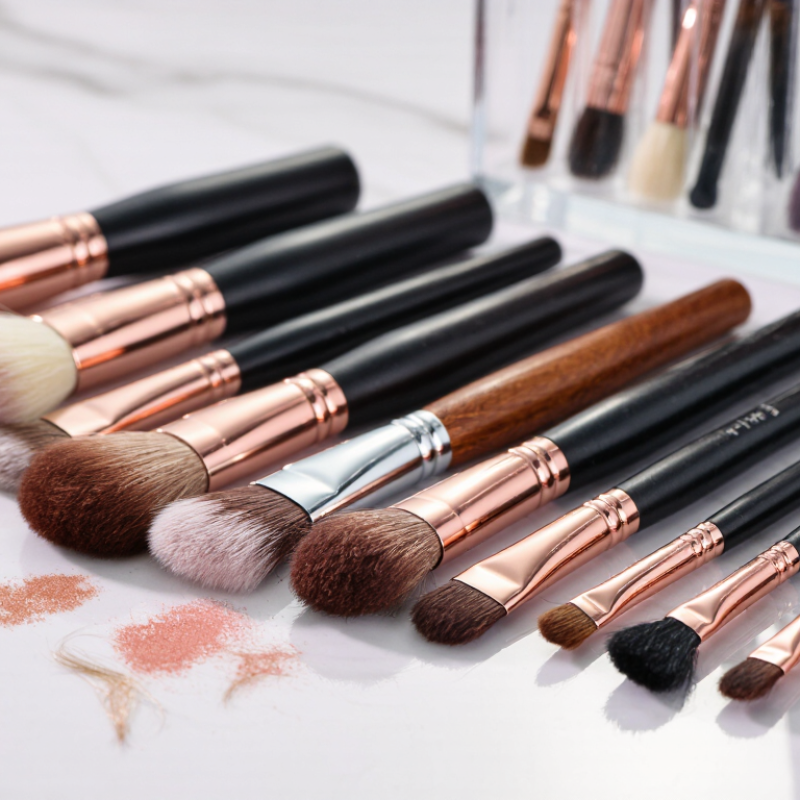
A high-quality makeup brush manufacturer starts with controlled materials, not attractive packaging.
Technicians inspect synthetic fibers or responsibly sourced natural hair for consistent length, softness, and resilience. The bundle should return to shape after repeated strokes. It should not feel scratchy on the cheek.
Small details matter: fiber alignment, a clean cut, and balanced density affect application and durability.
Experienced makers test samples before approving a production batch.
Shedding often begins inside the handle.
If fibers are poorly crimped, loosely packed, or fixed with weak adhesive, they can loosen during washing and daily use. A reliable manufacturer checks ferrule pressure, adhesive coverage, drying time, and pull strength.
They also perform wash-cycle tests, drop tests, and visual inspections under consistent lighting.
Test records should identify the material lot, operator, date, and corrective action.
This traceability makes quality claims more believable.
Factory expertise is also visible in communication.
A dependable team explains tolerances instead of promising perfection. No process is flawless. A few loose fibers may appear, especially after the first cleaning, but repeated shedding signals a problem.
Manufacturers should collect user feedback, investigate root causes, and adjust filling or bonding methods. Independent testing can strengthen confidence, although test conditions must match real use.
A brush deserves evaluation in the hand, not only on a spreadsheet.
China’s Top 10 Makeup Brush Manufacturers are gaining attention as beauty tools become more specialized. China’s National Bureau of Statistics reported cosmetics retail sales of about RMB 414.2 billion in 2023. This growth supports stronger factory investment, but output alone does not prove quality.
A reliable top-ten evaluation should examine fiber selection, ferrule crimping, adhesive control, and inspection records. Manufacturers serving professional buyers usually provide OEM development, batch testing, and export documentation. Grand View Research estimates that the global makeup tools market will continue expanding through 2030, driven by home beauty routines and online sales. That demand makes shedding a serious concern. Loose fibers often result from weak adhesive, uneven trimming, poor curing, or excessive pulling during washing. Even experienced factories can miss defects in fast production cycles. That point deserves honest review.
Tips: Request a 50-piece sample test before placing a bulk order. Rub each brush on clean black fabric. Wash it five times with mild cleanser. Count released fibers after every wash. A dependable supplier should explain its glue formula, curing time, fiber grade, and inspection standard. Check whether the factory records defects by production batch. Photos are useful, but physical testing is stronger. Also inspect the handle joint closely. Small gaps may become larger after repeated cleaning.
| No. | Common Shedding Cause | Affected Brush Component | Why Shedding Occurs | Recommended Quality Check | Preventive Measure |
|---|---|---|---|---|---|
| 1 | Insufficient adhesive bonding | Fiber bundle and ferrule | Too little adhesive, uneven adhesive distribution, or poor curing can leave fibers loosely secured inside the ferrule. | Manual pull test and visual inspection after curing | Control adhesive dosage, mixing, application time, and curing conditions. |
| 2 | Poor ferrule crimping | Ferrule and brush head | An uneven or weak crimp may not hold the fiber bundle firmly, especially during washing or repeated use. | Check crimp symmetry, ferrule movement, and head stability | Use calibrated crimping equipment and inspect ferrule dimensions regularly. |
| 3 | Loose or poorly aligned fibers | Synthetic or natural bristles | Fibers that are not properly gathered, aligned, and secured can work loose during normal brushing. | Inspect the brush shape under magnification and perform a gentle combing test | Improve fiber sorting, bundling, alignment, and pre-assembly handling. |
| 4 | Incompatible adhesive and materials | Adhesive, ferrule, and fibers | Some adhesives do not bond reliably to particular plastics, metals, coatings, or fiber surfaces. | Conduct material compatibility and aging checks before mass production | Confirm material specifications and use a validated adhesive system. |
| 5 | Improper curing or drying | Adhesive layer | Excess moisture, unsuitable temperature, or insufficient curing time can reduce the final bond strength. | Measure curing time and verify bond strength before packing | Maintain documented temperature, humidity, and curing-time controls. |
| 6 | Excessive washing or soaking | Adhesive and fiber bundle | Repeated exposure to water, cleanser, oils, or alcohol-based products may weaken some bonding systems over time. | Perform repeated wash-and-dry cycle testing with suitable cosmetic cleansers | Use water-resistant bonding materials and provide proper care instructions. |
| 7 | Rough handling during production | Fiber tips and brush head | Aggressive trimming, combing, shaping, or packing can damage fibers and loosen individual strands. | Check tip condition and loose-fiber count after shaping and packaging | Use controlled tools, trained operators, and protective packaging. |
| 8 | Low-quality or damaged fibers | Brush fibers | Brittle, split, contaminated, or mechanically damaged fibers are more likely to break or detach. | Inspect fiber diameter, flexibility, surface condition, and breakage | Set incoming-material specifications and store fibers in clean, dry conditions. |
| 9 | Excessive mechanical stress in use | Fiber bundle and ferrule joint | Strong pressing, twisting, or dragging across the skin places repeated stress on the fiber-to-ferrule connection. | Conduct flexing, brushing, and repeated-use durability tests | Optimize fiber density, ferrule depth, adhesive coverage, and brush geometry. |
| 10 | Poor storage and transportation conditions | Complete brush assembly | Heat, humidity, compression, dust, and friction during storage or shipping may affect fibers and adhesive joints. | Inspect samples after simulated transport and environmental exposure | Use protective sleeves, suitable cartons, dry storage, and controlled transport conditions. |
Note: Brush shedding can result from one or more factors. Proper incoming-material inspection, process control, durability testing, and user care instructions help reduce the risk.
Makeup brushes look simple, but their construction controls comfort, precision, and shedding. McKinsey’s 2023 beauty report expects the global beauty market to approach $580 billion by 2027. That growth increases demand for tools with consistent performance, not attractive packaging alone.
A brush begins with its filament type, cut length, diameter, and taper. Synthetic fibers usually offer stable shape and easier cleaning. Natural hair can provide a softer, irregular touch. The bundle enters a metal ferrule, where alignment and compression matter. Adhesive then connects the fibers to the ferrule and handle.
If the glue misses the inner walls, loose fibers may appear after washing, twisting, or heat exposure. Small gaps can become visible quickly.
The ferrule is the weak point.
During factory inspections, technicians often test dry pulling, wet washing, and repeated bending. These checks reveal problems that visual inspection misses. ISO 22716 emphasizes controlled production, cleanliness, and documented processes for cosmetic-related manufacturing. However, the standard does not guarantee every brush will resist shedding. A perfect-looking sample can still hide uneven glue distribution. I would also question overly tight bundles; they may feel dense but lose shape during use. Better construction balances fiber tension, ferrule depth, adhesive coverage, and handle stability. That balance is difficult to measure, and sometimes manufacturers accept small inconsistencies too easily.
Why do makeup brushes shed?
The answer usually begins inside the ferrule, not at the bristle tip. Loose fibers may result from weak adhesive, uneven crimping, poorly aligned bristles, or aggressive trimming. Natural hair can also break when cuticles are damaged. Synthetic filaments may deform under heat or friction.
In factory inspections, I check the ferrule, tug resistance, and brush surface under bright light. It happens. Repeated shedding is not acceptable workmanship.
Market pressure makes this issue more visible. Statista Consumer Market Insights estimated global beauty and personal care revenue at about US$646 billion in 2024. Consumers now compare tools closely through online reviews.
Yet no single worldwide shedding limit exists for makeup brushes. ISO 22716 supports controlled cosmetic manufacturing, but it does not certify a brush as shed-proof.
Reliable suppliers should document fiber inspections, adhesive curing, crimp strength, and wash-cycle testing. A dry sample may pass, then shed after repeated washing. That gap deserves more attention.
Tips:
The advice sounds basic, but handling errors can expose weak construction.
Makeup brush shedding usually begins with loose fibers, weak adhesive, or rough handling. In factory inspections, I check the ferrule, glue line, and fiber bundle before testing softness. A simple pull test can reveal instability. Gently tug several fibers. If many move, the brush needs correction.
Prevent shedding by washing new brushes carefully. Use lukewarm water and mild cleanser. Keep water below the ferrule. Water trapped inside can weaken the adhesive. Rinse until clear, then press the brush with a clean towel. Do not twist it. Shape the head and dry it flat, with the fibers extending beyond the table edge. Never dry a wet brush upright.
Storage also matters. Keep brushes in a ventilated holder, away from heat and strong sunlight. Avoid squeezing them into crowded cosmetic bags. Friction can break fibers or loosen the ferrule. During quality control, manufacturers should inspect random batches, measure fiber retention, and repeat tests after washing. One test is not enough.
I once assumed a soft brush was automatically durable. It was not. Excessive softness sometimes came from loosely packed fibers. If shedding continues, stop using the brush on sensitive skin and contact the seller with photos, purchase details, and washing records. A replacement may solve the issue, but recurring shedding suggests a production problem rather than user error.
Fiber type, cut length, diameter, taper, and bundle alignment all matter. Synthetic fibers usually keep their shape well. Natural fibers may feel softer and less uniform.
Shedding often comes from weak adhesive, loose fibers, or poor ferrule compression. Small gaps inside the ferrule can appear after washing or heat exposure. The ferrule is the weak point.
Gently tug several fibers near the brush head. If many fibers move, the bundle may be unstable. A soft brush is not always a durable brush.
Use lukewarm water and a mild cleanser. Keep water below the ferrule. Rinse until the water looks clear.
Press it gently with a clean towel. Do not twist the fibers. Shape the brush and dry it flat, with the head extending beyond the table edge.
Water can move into the ferrule and weaken the adhesive. This may cause loose fibers later. Upright drying looks convenient, but it can create hidden damage.
Store them in a ventilated holder away from heat and strong sunlight. Avoid crowded cosmetic bags. Friction can break fibers or loosen the ferrule.
Stop using the brush on sensitive skin. Take photos and record washing details, purchase information, and the shedding problem. A replacement may help, but repeated shedding may indicate a construction issue.
This article explores what defines a high-quality makeup brush manufacturer, focusing on material selection, skilled craftsmanship, consistent quality control, ethical production, and the ability to meet different customer needs. It presents China’s top 10 makeup brush manufacturers as examples of the country’s broad manufacturing capabilities, while explaining how brushes are designed and constructed. Key elements include the shape and density of the bristles, the connection between the ferrule and handle, ergonomic design, and careful finishing processes that influence performance and durability.
The article also answers the common question, “why do makeup brushes shed?” Shedding may result from weak adhesive, poorly secured bristles, low-quality fibers, rough handling, excessive washing, or improper storage. To prevent and solve this problem, users should choose well-made brushes, wash them gently, avoid soaking the ferrule, reshape the bristles after cleaning, and dry them in a suitable position. Manufacturers can further reduce shedding through stronger assembly methods, thorough inspections, and reliable quality standards.
